
Discipleship and Evangelism Are Not Two Things
You probably feel the pull in two directions. On one side, you know you should be out there sharing the gospel — evangelizing, as the word goes. On the other side, you’re deeply committed to discipleship: walking with people, doing life together, helping them grow in Jesus. And somewhere underneath both of those is a nagging feeling that you’re not doing enough of either.
What if I told you that nagging feeling is rooted in a false distinction?
Here’s what I mean: most of us have learned to think of discipleship and evangelism as two separate activities — two different gears in the Christian life. Evangelism is how you get someone into the door of faith. Discipleship is what happens after they walk through it. Get them saved, then disciple them. First one, then the other.
But when you read Jesus closely — and when you look honestly at your own faith journey — that sequence starts to fall apart. And what emerges in its place is something far more freeing.
The Great Commission Said Exactly One Thing
When Jesus gave the Great Commission in Matthew 28, he did not say “go and evangelize.” He said go and make disciples. That’s it. One command. No separate step for evangelism tucked in before it.
That isn’t an oversight. Jesus wasn’t skipping the important part. He was telling us something about how the whole process actually works.
Discipleship — the ongoing work of learning to follow Jesus, holding to his teaching, and being formed by his truth — is the thing. It is the overarching category. Everything we call evangelism happens inside of it.

We’ve Been Running This Backwards
Here’s the sequence most of us were handed: convince people of the truth, lead them in a prayer, then start discipling them. Belief first, relationship second.
But in John 8, Jesus describes it differently. He says:
“If you hold to my teaching, you are really my disciples. Then you will know the truth, and the truth will set you free.”
— John 8:31–32
Read that again. The holding comes before the knowing. The following comes before the full understanding. Jesus’ model is: come and follow me first, and as you do, the truth will open up and freedom will follow.
This means discipleship — the process of journeying with someone toward Jesus — can begin long before they confess faith. In fact, it usually does.
Think about your own story. Before you ever said a prayer or walked an aisle, there were probably people in your life who modeled grace, whose faith intrigued you, whose families operated differently. There were conversations, moments of trust, seeds of belief forming in your heart — first about God’s generosity, then about his character, then eventually about your own need for a Savior. That whole process was discipleship. And it also happened to be evangelism.
You were being discipled to faith, not pitched into it.
If you’ve been wrestling with how discipleship and evangelism fit together, the podcast episode “Does Our Evangelism Need to Change?” digs into this same shift in a really practical way.
What This Means for How You Engage People
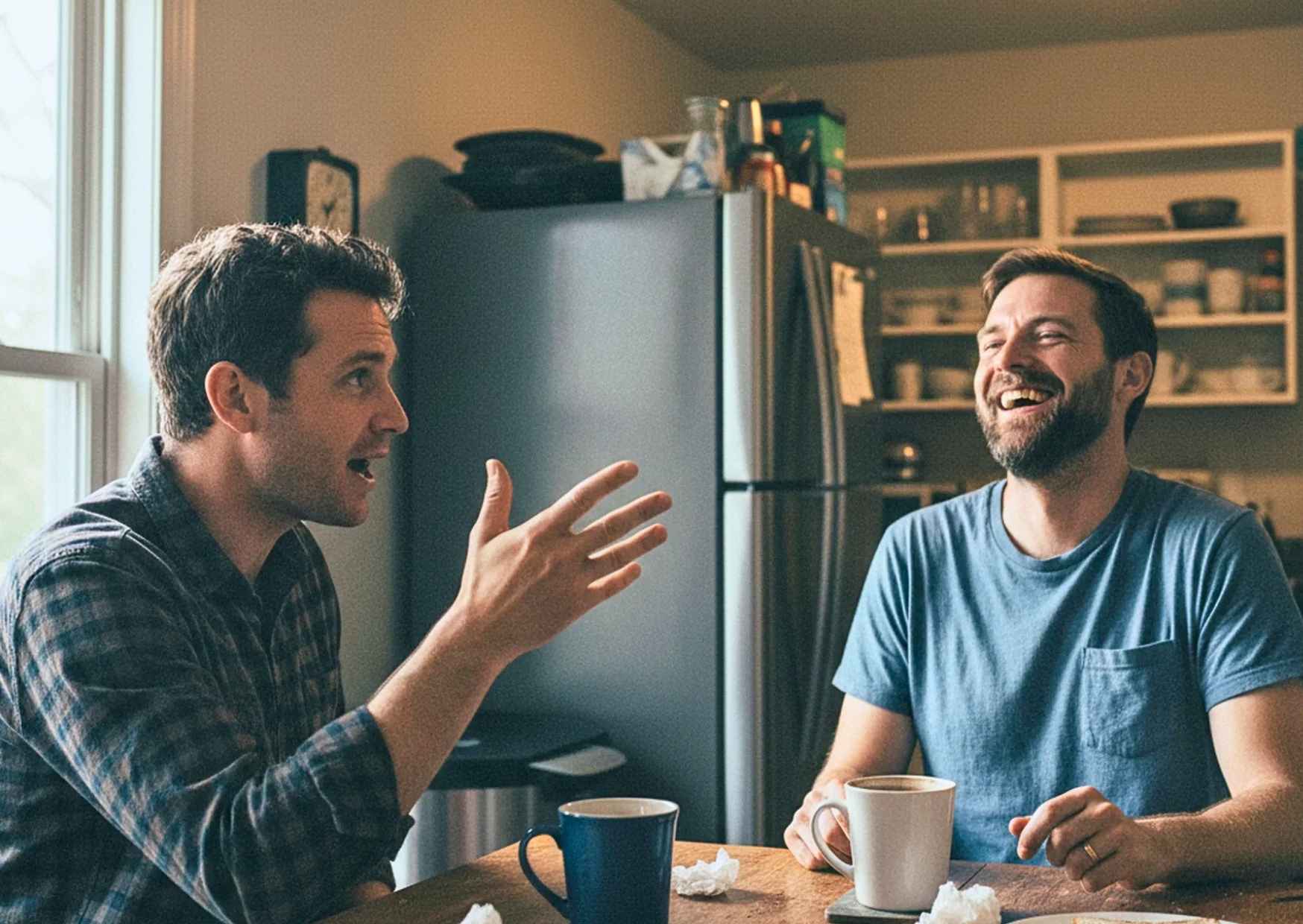
Here’s the practical shift: you don’t have to wait until someone is “ready to hear the gospel” to start the discipleship process with them. The relationship is the discipleship. The invitation into your home, your table, your community — that’s where belief begins to form.
Don’t assume the first move from unbelief to belief in someone’s life will be around their sinfulness and need for a Savior. That’s often one of the last major shifts, not the first. For many people, belief begins with experiencing real grace through you. Or seeing that you actually trust God’s goodness in hardship. Or watching how your family handles conflict differently.
The apostle Paul describes this beautifully:
“Just as you received Christ Jesus as Lord, continue to live your lives in him, rooted and built up in him, strengthened in the faith as you were taught.”
— Colossians 2:6–7
Notice — the same process that brought you to faith is the process you keep living in. There’s no “before discipleship” and “after discipleship” divide. It’s one continuous movement.
Here’s a short video where I talk through this same idea if you’d like to share it or watch later.
You Are Always Being Evangelized
That last point from Colossians points to something even more liberating: discipleship doesn’t end when you reach maturity. It doesn’t conclude after baptism or after some threshold of spiritual growth. The truth is that we are always in need of being evangelized — always in need of having the good news proclaimed fresh over our hearts.
This means discipleship is the ongoing “evangelizing” of your own heart. Every Sunday gathering, every honest conversation with a friend, every time you sit with Scripture and let it do its work in you — that is evangelism happening on the inside.
And when you live that kind of open, gospel-formed life in community with people who don’t yet follow Jesus? They get pulled into that same process, often before they can name what’s happening to them.
If you want to take a deeper look at what this kind of identity-rooted life looks like from the inside out, I wrote about it in “Birthright: Living from Your Gospel Identity.”
The Guilt Can Go
So: should you focus on discipleship or evangelism?
Yes.
But not because they’re two separate things you need to balance. Because they are, at the deepest level, the same thing. Discipleship is evangelism done at full depth — evangelism that doesn’t stop at the door of conversion but keeps going for a lifetime.
The guilt about not “doing enough evangelism” often comes from an unspoken picture of evangelism as a special program, a separate track, a different skill than just being deeply present with people and pointing them to Jesus. But if you are genuinely engaged in disciple-making — living the gospel, sharing life, inviting people in, helping them take their next step — you are evangelizing. Constantly.

You don’t need to add a separate gear. You need a clearer picture of how the one gear actually works.
If you’re ready to build that kind of life — rhythms and practices that make disciple-making natural and reproducible — Discipleship as a Lifestyle is a great next step. It’s the practical framework I’ve used to help thousands of leaders move from discipleship as a concept to discipleship as how they actually live.
And if you’re a leader wanting to walk through this kind of discipleship culture with others, the Everyday Disciple MAKERS Coaching and Apprenticeship is where we go deep together.
Frequently Asked Questions
Q1: How do I start discipling someone who isn’t a Christian yet?
Just start. Invite them into your life — dinner, a project, a walk. Ask good questions. Be honest about your own faith. Don’t wait for them to express spiritual interest before you extend relational investment. Discipleship begins with proximity and genuine care, not a “spiritual conversation” threshold.
Q2: What if I share my life with someone for years and they never come to faith?
Keep going. Your faithfulness is not wasted. You don’t control outcomes — God does. The Great Commission calls us to make disciples, not to manufacture conversions. Some people you invest in will come to faith long after the season of close relationship. Others you may never see come to faith in your lifetime. Neither outcome undoes the value of the love you extended.
Q3: How do I know when to be more direct about the gospel in a relationship?
Follow the Spirit’s lead and pay attention to the conversation. When someone is asking genuine questions about God, meaning, or your faith — that’s usually an invitation to be more explicit. But don’t feel pressure to escalate every conversation toward a “decision.” Ongoing faithfulness, not one pivotal moment, is usually what God uses most.

About the author, Caesar
The author of the top-selling books, The Gospel Primer, Transformed and Small is Big, Slow is Fast. His latest book, SLOW BURN: Relaxing Into Theology hit #1 on Amazon.
"I help those with a high commitment to intentional living in the areas of their family, faith and work acquire the leadership skills and tools necessary to succeed and leave a lasting legacy."