
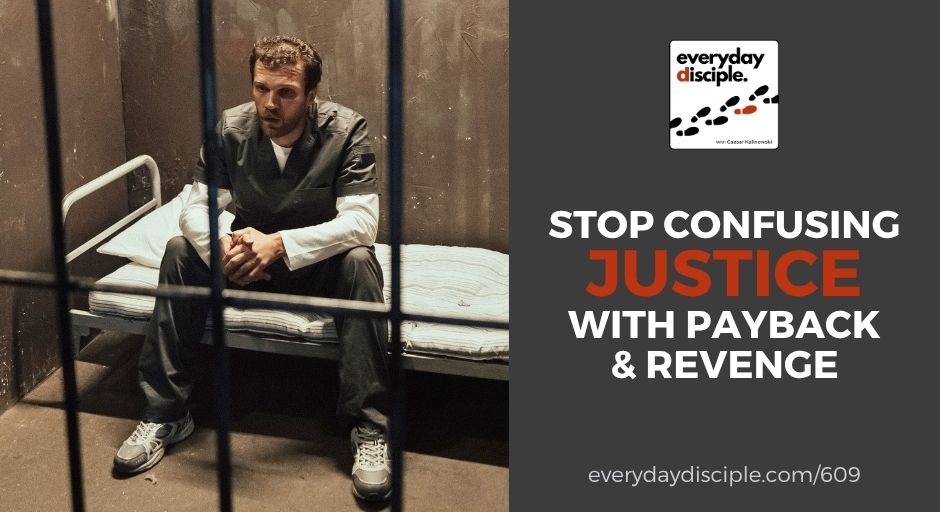
Stop Confusing Justice With Payback & Revenge
Most of us carry a definition of justice we picked up somewhere along the way — and it usually looks like payback. Someone wrongs you, someone wrongs others, and justice means they get what’s coming to them. But what if that version of justice has almost nothing to do with what God actually means by the word?
In this episode of the Everyday Disciple Podcast, we’re going to dig into what the Bible actually means by mercy and justice — and why they’re not opposites. You’ll discover how God’s justice is really about restoration, and what it looks like to participate in that restorative work in the lives of people around you.
In This Episode You’ll Learn:
- The biblical definitions of mercy and justice that will change how you see both
- What actually produces a love of mercy in your own heart
- How God’s restorative justice is bigger than any weekend service project
- Where to start engaging real injustice — locally and globally
From this episode:
“Justice is really about restoration. Getting even or punishing people for their screw-ups is going in the wrong direction. It’s working against God’s purposes. God is not interested in getting even; he wants people to see who they really are — who they were meant to be. How they should live. For things to be made right, restored.”
Each week the Big 3 will give you immediate action steps to get you started.
 Download today’s BIG 3 right now. Read and think over them again later. You might even want to share them with others…
Thanks for Listening!
Thanks so much for joining us again this week. Have some feedback you’d like to share? Join us on Facebook and take part in the discussion!
If you enjoyed this episode, please share it using the social media buttons you see at the top of this page or right below.
Also, please leave an honest review for The Everyday Disciple Podcast on iTunes. Ratings and reviews are extremely helpful and greatly appreciated! They do matter in the rankings of the show, and we read each and every one of them.
Links and Resources Mentioned in This Episode:
Coaching and Mentorship in Missional Living by Caesar and his wife Tina
Resources for missional living and group training – Missio Publishing
The Justice Primer will walk you step-by-step as a group into understanding what it means to love mercy and do justice among the least of these in your area.
The Gospel In Everyday Life Workshop Register Now FREE

Transcript
We hear a lot about justice, but not so much about mercy.
Caesar Kalinowski:And that's where it starts in the heart.
Caesar Kalinowski:But when you start trying to move towards justice, if you see it as a leveling of the scales of a making even, then you actually miss the whole heart of God.
Heath Hollensbe:Which begs the question, what do you think, 'cause we talk about the thing behind the thing quite a bit on this show.
Caesar Kalinowski:Yeah.
Heath Hollensbe:What do you think is going on in our own hearts when we're actually feeling the need to see justice done on our own specific terms?
Caesar Kalinowski:Yeah.
Caesar Kalinowski:Well, and, and that's the only way I can s- unless I, unless I grasp God's understanding of mercy and what true justice is, then I'm left sitting there managing it for my own, right?
Caesar Kalinowski:Yeah.
Caesar Kalinowski:We wanna be the one who manages right and wrong, good and evil for ourselves.
Heath Hollensbe:Welcome to the Everyday Disciple Podcast, where you'll learn how to live with greater intentionality and an integrated faith that naturally fits into every area of life.
Heath Hollensbe:In other words, discipleship as a lifestyle.
Heath Hollensbe:This is the stuff your parents, pastors, and seminary professors probably forgot to tell you.
Heath Hollensbe:And now, here's your host, Caesar Kalinowski.
Caesar Kalinowski:Happy birthday to you.
Caesar Kalinowski:Tomorrow, right?
Caesar Kalinowski:Yeah.
Caesar Kalinowski:So yeah, I probably, probably just … We owe some royalties for that song from- I know … all these new birthday songs, 'cause you can't sing that.
Caesar Kalinowski:Someone went out and copyrighted that thing like that.
Caesar Kalinowski:And they're gonna
Heath Hollensbe:make a bank.
Heath Hollensbe:Yeah, from us.
Heath Hollensbe:If they
Caesar Kalinowski:can figure out how to
Heath Hollensbe:collect it.
Heath Hollensbe:Yeah.
Heath Hollensbe:Yeah,
Caesar Kalinowski:go for it.
Caesar Kalinowski:You find us.
Heath Hollensbe:1983, San Diego, California, I think.
Caesar Kalinowski:Any, uh, big plans for the birthday tomorrow?
Heath Hollensbe:None.
Heath Hollensbe:I have to work.
Heath Hollensbe:I mean, I'm working all day.
Caesar Kalinowski:All
Heath Hollensbe:day.
Heath Hollensbe:I might call in sick.
Caesar Kalinowski:And I-
Heath Hollensbe:Yeah, I might just call
Caesar Kalinowski:Don't say it on air.
Heath Hollensbe:Yeah, they'll, they'll find me out.
Heath Hollensbe:'Cause
Caesar Kalinowski:I'm sure your boss is just sitting there listening to it, like- I knew it … "Huge fan." I knew he's not sick.
Caesar Kalinowski:I mean, he looks sick, but he does not… He's not really sick.
Heath Hollensbe:The big 35, man.
Heath Hollensbe:I'm feeling it.
Caesar Kalinowski:Oh, my goodness, man.
Caesar Kalinowski:Hey, um, any cool reviews coming in that you wanna share?
Heath Hollensbe:Yeah, man.
Heath Hollensbe:We actually got a review by Schmuck21.
Heath Hollensbe:Five-star review.
Heath Hollensbe:They're, they're- After the name
Heath Hollensbe:… Caesar Kalinowski: so awesome.
Heath Hollensbe:That must just be a weird last name or nickname.
Heath Hollensbe:They're not schmucks.
Heath Hollensbe:I hope
Caesar Kalinowski:not.
Caesar Kalinowski:Not with a review like this.
Heath Hollensbe:Yeah, Schmuck21 says, "Love these podcasts and how they actually touch on things I can relate to.
Heath Hollensbe:I can't wait for Monday mornings to listen to the new podcast for the week.
Heath Hollensbe:They're thought-provoking, and they cover items that seem like are often skipped out and ones that other people don't wanna touch." So that's cool.
Caesar Kalinowski:Ooh, hot button.
Heath Hollensbe:Hot button.
Caesar Kalinowski:Yeah, I don't know about that, but yeah, we, we try to talk about it all, right?
Caesar Kalinowski:Absolutely.
Caesar Kalinowski:Gospel and all life, everything.
Caesar Kalinowski:You know what?
Caesar Kalinowski:We have a p- packed, uh, topic here today, so I think we, we need to move on from our jovial banter, my fr- Let's go … my happy birthday friend.
Heath Hollensbe:We're t- With- We're talking justice and mercy, and one thing that it seems like to me, Caesar, is that it only takes a couple seconds of being on social media to see somebody crying out for justice.
Heath Hollensbe:And as we like to define things here on the podcast, maybe you can just start off with the definitions of justice in the way that we're familiar with in society, and mercy and justice from a biblical sense as well.
Caesar Kalinowski:Good idea, um, 'cause they're not exactly the same thing.
Caesar Kalinowski:Sure.
Caesar Kalinowski:I think… Well, and I, and I'll…
Caesar Kalinowski:Look, I'll share.
Caesar Kalinowski:I think maybe we're closer to understanding mercy, but we don't love it.
Heath Hollensbe:Yeah.
Caesar Kalinowski:But, so I think we do often confuse mercy and, and grace to start out with.
Caesar Kalinowski:You know, we're gonna talk about mercy and justice today.
Caesar Kalinowski:I think we often confuse mercy and grace, or we use them interchangeably.
Caesar Kalinowski:So while the terms do have similar meanings, grace and mercy are actually not the same.
Caesar Kalinowski:So let me just give you some handles that have helped me-
Heath Hollensbe:Okay
Heath Hollensbe:… Caesar Kalinowski: throughout my life- That'd be great … understand those two when I've taught and made disciples.
Heath Hollensbe:To summarize the difference, mercy is God not punishing us as our sins deserve, not getting what we deserve, and grace is God blessing us despite the fact that we don't deserve it.
Heath Hollensbe:Grace is unmerited favor.
Heath Hollensbe:It's extending undeserved kindness.
Heath Hollensbe:Okay.
Caesar Kalinowski:Okay?
Caesar Kalinowski:Now, in society, I think a standard definition and understanding of the word and concept of mercy is pretty accurate.
Caesar Kalinowski:It says compassion or forgiveness shown towards someone whom it is within one's power to punish or harm.
Heath Hollensbe:Okay.
Caesar Kalinowski:So there again, it's mercy being, "Hey, you're not getting what you deserve even though I could do that."
Caesar Kalinowski:So I think we're more inclined to rightly understand and even show mercy as a culture.
Caesar Kalinowski:Then I, when I say that, I mean including Christians, right?
Caesar Kalinowski:Right.
Caesar Kalinowski:Including you and I, right?
Caesar Kalinowski:But when it comes to justice, mm, that's another thing entirely.
Caesar Kalinowski:So here are my definitions of mercy and justice based on what I see in scripture, okay?
Caesar Kalinowski:Mercy is an attitude of the heart that's inclined toward compassion, and it most often translated to mean kindness or goodness in scripture.
Caesar Kalinowski:Mercy is often expressed through, notice this, acts of justice and restoration.
Heath Hollensbe:Wow.
Caesar Kalinowski:Okay?
Caesar Kalinowski:So- Yeah … key thing here, though, mercy's an attitude of the heart.
Caesar Kalinowski:Now, justice refers to intentionally acting justly or proactively seeking restoration.
Heath Hollensbe:Hmm.
Caesar Kalinowski:Okay?
Caesar Kalinowski:That's what justice is.
Caesar Kalinowski:Justice is an action, and it comes from a response to the heart of mercy.
Heath Hollensbe:Wow.
Heath Hollensbe:Yeah, that's two totally different things than what- Yeah … we, how we normally think.
Caesar Kalinowski:Yeah.
Heath Hollensbe:I'm even thinking as you're describing it, how many times in my own life I actually love mercy rather than to be quick to seek my own personal version of justice, maybe in a particular situation.
Caesar Kalinowski:Yeah, and, and you're right 'cause the Bible challenges us in, in Micah 6 to love mercy.
Caesar Kalinowski:It says… Well, 'cause I know everybody just reads the heck out of Micah, I'll just I'll give you Micah 6:8 says, "He has shown you, O mortal, what is good, and what does the Lord require of you?" Hmm.
Caesar Kalinowski:"To act justly and to love mercy and to walk humbly with God."
Caesar Kalinowski:So y- there the order's flipped, but it's to act justly, that we're just and justice and justified- Sure … and ju- all that, right?
Caesar Kalinowski:And to love mercy.
Caesar Kalinowski:And then I love it 'cause it says, "And to walk humbly with your God," which tells me, and remember, you need both.
Heath Hollensbe:Yeah.
Caesar Kalinowski:Absolutely.
Caesar Kalinowski:Otherwise, you could walk proudly, like, "Well, I don't need that.
Caesar Kalinowski:I've handled it." So- Hmm … now here's a, here's a powerful quote from Tim Keller, quote him often, that really helps me understand all this. He says, "Mercy's a command of God, yet it cannot simply be a response to a demand." Right. "It must arise out of our hearts made generous and gracious by an understanding and experience of God's mercy towards us.
Caesar Kalinowski:It is the hearts of the people that must be melted until they ask, 'Who or where is my neighbor?'"
Heath Hollensbe:Wow, man.
Heath Hollensbe:That's really helpful.
Heath Hollensbe:It g- it reframes everything that, like the first question was saying is when I look on social media and I'm seeing these demands for things You can't just muster this up.
Heath Hollensbe:It has to be…
Heath Hollensbe:It's, there's a something, we always say the thing behind the thing.
Heath Hollensbe:Yeah.
Heath Hollensbe:There's this heart aspect that has to take place.
Caesar Kalinowski:So mercy's a heart response, but it's a heart response to what?
Caesar Kalinowski:God's mercy to us.
Caesar Kalinowski:Yeah.
Caesar Kalinowski:Back to the definition.
Caesar Kalinowski:We didn't, we don't get what we receive.
Heath Hollensbe:Yeah.
Caesar Kalinowski:So oftentimes I'll joke with people to say, "How you doing today?"
Caesar Kalinowski:I'm like, "Well, better than I deserve."
Heath Hollensbe:Hm.
Caesar Kalinowski:And they'll kind of like, but like, no, true.
Caesar Kalinowski:Like, serious.
Caesar Kalinowski:Yeah.
Caesar Kalinowski:Like I'm super, super serious.
Caesar Kalinowski:Yeah.
Caesar Kalinowski:Now, through the way He lived, Jesus often challenged us on this point.
Caesar Kalinowski:You see it over and over in scripture.
Caesar Kalinowski:He knew our hearts, He knew His own disciples' hearts, pointing out the discrepancy between His understanding of mercy and ours.
Heath Hollensbe:Hm.
Caesar Kalinowski:And He called us to change the way that we viewed and we lived out of mercy.
Caesar Kalinowski:Like, you, you can notice in scripture, He made time for the outcast- Mm-hmm … for the beggars, for sick people.
Heath Hollensbe:Yep.
Caesar Kalinowski:He showed them mercy.
Caesar Kalinowski:Now, He knew ultimately that they were still Gods in their own life and what they deserve, but you see who He hung out with.
Caesar Kalinowski:Sure.
Caesar Kalinowski:He went out of His way for the woman at the well.
Caesar Kalinowski:He gave attention to the man at the sheep gate, by the pool there.
Heath Hollensbe:Yep.
Caesar Kalinowski:He offered grace and mercy both to the woman caught in adultery.
Heath Hollensbe:Hm.
Caesar Kalinowski:Now, all these perspectives, I think Jesus is teaching us, required a shift from traditional sort of our human thinking about the person Jesus gave His attention to.
Caesar Kalinowski:He didn't see them as, you know, a hassle or some sort of pest, or as less valuable.
Caesar Kalinowski:Sure.
Caesar Kalinowski:He viewed them as children of God, and that is so key.
Caesar Kalinowski:He saw them as worthy of His attention- Hm … and, and, and the reason He was there, and He treated them as His friends.
Caesar Kalinowski:And when we… And I think when we begin to see, Heath, uh, need th- that's all around us as an opportunity to live out the gospel- Yep
Caesar Kalinowski:instead of like, "Ugh, that's a mess. Someone should do something about that." When, but when we see need as an opportunity for the gospel, we begin to see people differently then.
Heath Hollensbe:Hm.
Caesar Kalinowski:That'll put names with faces, and that'll put the gospel and good news into everything.
Caesar Kalinowski:And, and we'll- Yeah … we'll, then we'll start to s- see and hear things differently, and stories that we can relate with.
Caesar Kalinowski:Sure.
Caesar Kalinowski:So, you know, to sort of summarize, the, the heart of mercy changes things.
Caesar Kalinowski:The heart of mercy, true mercy changes judgment in our lives-
Heath Hollensbe:Yep
Heath Hollensbe:… Caesar Kalinowski: to humility.
Heath Hollensbe:Like, but, but by the grace of God, therefore go, go I, right?
Heath Hollensbe:Yeah.
Heath Hollensbe:Sure.
Caesar Kalinowski:True mercy changes sympathy, like, "Man, that really sucks for them," to action.
Heath Hollensbe:Hm.
Caesar Kalinowski:Remember we said that justice, which is about restoration, we're gonna go deep into that in a minute- Sure … comes from a heart of mercy.
Caesar Kalinowski:True mercy changes our kingdom, our kingdom, you know, like, w- I wanna rule things- Yeah … make all the decisions about me, my time, my life, my family, my money, all that, changes our kingdom to God's kingdom.
Caesar Kalinowski:Mm. True mercy changes selfishness to selflessness.
Heath Hollensbe:Oh.
Caesar Kalinowski:Now, by the way, I get a lot of my thinking from this from, uh, The Justice Primer.
Heath Hollensbe:Yeah.
Caesar Kalinowski:A lot of our longterm listeners have probably used The Gospel Primer- Yep … or maybe Hugh Halter and Mats Smith's The Tangible Kingdom Primer.
Caesar Kalinowski:There's also The Justice Primer by Brandon Hatmaker, and I'll talk a little bit more about that later, but man, there's some great stuff in that, okay?
Heath Hollensbe:Yeah.
Heath Hollensbe:That's good, man.
Caesar Kalinowski:Yeah.
Heath Hollensbe:You know, so the m- I'm thinking even as you're talking, the personableness of mercy, right?
Heath Hollensbe:When you actually see people as, as the Imago Dei, it changes the way that we interact with them.
Heath Hollensbe:And I wonder if the same thing's true with justice.
Heath Hollensbe:Many of us desire justice in the sense that we wanna see the wrong made right, and it only takes us having the news on for a few minutes to see people really demanding justice.
Heath Hollensbe:"I want justice. I want justice."
Caesar Kalinowski:Yeah.
Heath Hollensbe:And I- But it begs the question, like, whose standards, right?
Heath Hollensbe:Are we-
Caesar Kalinowski:That's right, and see, that's the problem.
Caesar Kalinowski:Like you just said, the wrong made right.
Caesar Kalinowski:That's what we're all wanting.
Caesar Kalinowski:You know, like, "I demand justice," or you see the people in court and they're broken because, you know, something bad happened to them or a family member, and, "I just, I'm just seeking justice."
Caesar Kalinowski:Yeah.
Caesar Kalinowski:They want the wrongs made right.
Caesar Kalinowski:But like you just said, by whose standard?
Heath Hollensbe:Yeah.
Caesar Kalinowski:I mean-
Heath Hollensbe:Good man
Heath Hollensbe:… Caesar Kalinowski: who, whose standard do you think- Like- … most people are trying to-
Heath Hollensbe:Probably our own.
Caesar Kalinowski:Exactly.
Caesar Kalinowski:Preferences,
Heath Hollensbe:our own standards,
Caesar Kalinowski:yeah.
Caesar Kalinowski:Exactly, and that's the problem because none of us see it from the same position.
Caesar Kalinowski:We hear a lot about justice, but not so much about mercy, and that's where it starts in the heart.
Caesar Kalinowski:But when you start trying to move towards justice, if you see it as a leveling of the scales- Yeah … of a making even, then you actually miss the whole heart of God.
Heath Hollensbe:Which begs the question, what do you think, 'cause we talk about the thing behind the thing quite a bit on this show.
Caesar Kalinowski:Yeah.
Heath Hollensbe:What do you think's going on in our own hearts when we're actually feeling the need to see justice done on our own specific terms?
Caesar Kalinowski:Yeah.
Caesar Kalinowski:Well, and, and that's the only way I can s- unless I, unless I grasp God's understanding of mercy and what true justice is, then I'm left sitting there managing it for my own, right?
Caesar Kalinowski:Yeah.
Caesar Kalinowski:We wanna be the one who manages right and wrong, good and evil for ourselves.
Heath Hollensbe:And for-
Caesar Kalinowski:And for everybody else.
Caesar Kalinowski:Sound familiar?
Caesar Kalinowski:Yeah.
Caesar Kalinowski:See, that's the original sin, right?
Caesar Kalinowski:Like hmm, i- in the day that you begin to eat of this fruit, the f- the knowledge of good and evil, right and wrong for yourself, you will surely die.
Caesar Kalinowski:It doesn't work.
Heath Hollensbe:Yeah.
Caesar Kalinowski:It really, really doesn't.
Caesar Kalinowski:But that's all we're left with.
Caesar Kalinowski:If, if we don't experience the mercy of God and begin to a- adapt and adopt his heart of mercy towards others, then we will seek a justice that's not God's idea of justice at all.
Caesar Kalinowski:Mm. And it'll be based on me managing right and wrong and a level scale based on my own perspective.
Caesar Kalinowski:Yeah.
Caesar Kalinowski:And guess what?
Caesar Kalinowski:I'm always gonna tip the scales to me.
Heath Hollensbe:Absolutely, right.
Heath Hollensbe:Right.
Heath Hollensbe:And that's where justice in a sense is pretty disillusioning because where do you draw these lines of where justice starts and where it ends?
Heath Hollensbe:'Cause we all have different approaches and different correct levels of justice.
Heath Hollensbe:We have ideas of what's just and what's not, and that varies from person to person.
Heath Hollensbe:What's
Caesar Kalinowski:fair.
Heath Hollensbe:Yeah.
Heath Hollensbe:It's not fair.
Heath Hollensbe:That's not fair.
Heath Hollensbe:I
Caesar Kalinowski:hear that a lot.
Caesar Kalinowski:"That's not fair," you know?
Heath Hollensbe:How, how do we as followers of Jesus set a baseline of what justice or maybe even the flip side of that, injustice, looks like?
Caesar Kalinowski:Well, I'm, I think I'm gonna take this a little … See, I think we're still kinda sitting, we're sitting on the precipice there because trying … For, for us to say, "Well, is there a list?" You know, is it, is it really like, hey, there use- there should be five things on each side of the scale.
Caesar Kalinowski:I, I think, I think that's a, a somewhat d- flawed understanding of justice, and I think we have a pretty deeply flawed understanding of justice worldwide today.
Caesar Kalinowski:So, um, let me give you, uh, you know, we start out with a definition of mercy and justice.
Caesar Kalinowski:Let me dig out a little bit deeper the, the definitions of justice, okay?
Caesar Kalinowski:Um, in the world, right, and the, the way you see it on the news, social media like you referred to- Sure … is it's, justice is payback or it's retribution.
Caesar Kalinowski:I remember one time being robbed.
Caesar Kalinowski:Our house was robbed.
Caesar Kalinowski:They caught the pr- I'll, I'll use the TV word, the perps.
Caesar Kalinowski:And, and then they, they had them give us res- you know, retri- restitution even, right?
Caesar Kalinowski:Mm. And all that, you know, pay us back.
Caesar Kalinowski:Or we see it as punishment.
Caesar Kalinowski:Mm. That's justice.
Caesar Kalinowski:They, they would get punished is justice or getting even.
Caesar Kalinowski:See, and we speak of getting justice, but the Bible actually speaks of doing justice.
Heath Hollensbe:Hmm.
Caesar Kalinowski:Like it's active.
Caesar Kalinowski:Now, here's what's really interesting.
Caesar Kalinowski:Justice from, from the Hebrew word- Sure … it, it, it means to be made right or to restore or to return.
Heath Hollensbe:Huh.
Caesar Kalinowski:That's what justice means.
Caesar Kalinowski:It doesn't mean scales, doesn't mean even Steven, doesn't mean punish.
Caesar Kalinowski:Every time you hear the word justice in scripture, think restore.
Heath Hollensbe:Hmm.
Caesar Kalinowski:Think return to what?
Caesar Kalinowski:To the way things used to be.
Caesar Kalinowski:Yeah.
Caesar Kalinowski:Now interestingly, and this to me is even more interesting, the same root word of justice is the same word in sc- in Hebrew as righteousness.
Heath Hollensbe:Hmm.
Caesar Kalinowski:Yeah.
Heath Hollensbe:I never knew that.
Caesar Kalinowski:Yeah.
Caesar Kalinowski:Righteousness.
Caesar Kalinowski:Same- Wow … same root, both words, and the, and the… And if you take it back to their root, it means to restore.
Caesar Kalinowski:Hmm.
Caesar Kalinowski:So justice, and now if you go back and read, anytime you see justice or just or whatever in scripture, and you read it with the word restoration in mind, that's what's going on.
Caesar Kalinowski:And you're gonna go, "Oh, my gosh, that changes the whole tone- Changes, yeah
Caesar Kalinowski:of God's character in this book, and now I begin to understand mercy right." Hmm.
Caesar Kalinowski:That's why I think they're, they're just linked.
Caesar Kalinowski:Okay?
Heath Hollensbe:Yeah.
Caesar Kalinowski:So getting even or punishing people for their screw-ups or their sin is going in the wrong direction actually.
Caesar Kalinowski:Hmm.
Caesar Kalinowski:It's working against God's purpose, 'cause when he talks about justice, God's not interested in getting even with anybody, though I kinda grew up thinking that.
Caesar Kalinowski:Sure.
Caesar Kalinowski:You know, God's sort of this angry, ticked-off God up in heaven, you know?
Caesar Kalinowski:Yeah.
Caesar Kalinowski:But he wants to see people He wants to see them who they really are and what they're meant to be.
Caesar Kalinowski:Mm. That's what he's hoping for them.
Caesar Kalinowski:How should they live?
Caesar Kalinowski:How do they get to live?
Caesar Kalinowski:He wants things to be right and restored.
Caesar Kalinowski:Restored back to what?
Caesar Kalinowski:Just, just look at the first humans walking with God in the cool of the day.
Heath Hollensbe:Yeah.
Caesar Kalinowski:Naked, unashamed, not hiding, not blaming.
Caesar Kalinowski:That's God's idea of restoration.
Heath Hollensbe:Gotcha.
Caesar Kalinowski:So you gotta get that picture.
Caesar Kalinowski:That's what justice is, and so when we hear people crying out for justice, it's like, it's as if we've taken that word and we've made it punishment or get even or something, and that's just not God's idea of justice.
Heath Hollensbe:Hmm.
Heath Hollensbe:That's so important, man.
Heath Hollensbe:It's so pertinent for today's situation.
Heath Hollensbe:'Cause again, I, I… like I was saying, we talked to a mutual friend yesterday, William.
Heath Hollensbe:It's like everywhere you go, man, every tweet I go through, it's just, "I demand justice. I demand justice." I think we're calling the wrong thing.
Heath Hollensbe:Like, we're not really demanding it in the way that we think we are, because we're demanding retribution, not that all thing actually be restored back to the original intent, right?
Caesar Kalinowski:I want justice for everybody else.
Heath Hollensbe:Yeah.
Caesar Kalinowski:But I, but I seek biblical justice for me.
Caesar Kalinowski:Like, I want to be restored back to the garden, but for you, I kinda want you to get punished for, for doing that or saying that, you know- Yeah … or whatever, right?
Caesar Kalinowski:Now, lest we think that's just, like, an Old Testament understanding of it-
Heath Hollensbe:Sure
Caesar Kalinowski:all wrapped up in things, see, Jesus, He taught the exact same thing.
Caesar Kalinowski:Restoration is why Jesus, in His first messages, you know, like when He's, they think He shows up and He's gonna be, He's gonna be, um, baptized, right?
Caesar Kalinowski:Yeah.
Caesar Kalinowski:And He says, "Teshuvah," I am probably not pronouncing that right, uh, "for the kingdom of heaven has come near."
Caesar Kalinowski:And that word means to return.
Caesar Kalinowski:See, there it is again.
Caesar Kalinowski:Yeah.
Caesar Kalinowski:Return to what?
Caesar Kalinowski:To the people we were originally created to be, the people that God is restoring us into.
Heath Hollensbe:Hmm.
Caesar Kalinowski:So follow, follow the through line here.
Caesar Kalinowski:God makes us in His image.
Caesar Kalinowski:We reflect the beauty and creativity and wonder of this God who made us.
Heath Hollensbe:Hmm.
Caesar Kalinowski:And Jesus now calls us to tesh- teshuvah, to return to our true selves, our righteousness to God.
Caesar Kalinowski:That's justice in His mind- Wow … a life lived close to God, restored relationships between us and God, between us and humans, right?
Caesar Kalinowski:That's what justice is.
Caesar Kalinowski:So somewhere in you- And I s- I'm looking at you, Heath, but I'm- Yeah.
Caesar Kalinowski:and everybody.
Caesar Kalinowski:Uh, somewhere in you is the you that God created you to be.
Heath Hollensbe:Mm-hmm.
Caesar Kalinowski:And, and that's, that's what He's concerned.
Caesar Kalinowski:He, He's not looking for a different you or a second you, a punished you, or a broken you.
Caesar Kalinowski:That's not His goal.
Heath Hollensbe:Mm-hmm.
Caesar Kalinowski:He wants you to be the first you, the God that He had created you to be in His image.
Caesar Kalinowski:And just so you think this is… You know, I'm gonna back this up with scripture.
Caesar Kalinowski:I'm not just making this stuff up.
Caesar Kalinowski:Look, Jesus talking here, Luke 4:18.
Caesar Kalinowski:"The Spirit of the Lord is on me because He has anointed me to preach good news to the poor. He has sent me to proclaim freedom for the prisoners and recovery of sight for the blind, to release the oppressed, to proclaim the year of the Lord's favor," not the Lo- Mm
Caesar Kalinowski:the year of the Lord's evening the scales or the year of the Lord's punishment.
Caesar Kalinowski:Again, in Lu- in Luke 6:20, 21, it says, "Look at, looking at His disciples, Jesus said, 'Blessed are you who are poor, for yours is the kingdom of God.'" Like, you get everything when, when you don't have everything else in the way.
Caesar Kalinowski:"Blessed are you who hunger now, for you will be satisfied." You won't be hungry anymore.
Caesar Kalinowski:Yeah.
Caesar Kalinowski:"Blessed are you who weep now, for you'll laugh." So you see, to the poor- There's good news.
Caesar Kalinowski:To the hungry, there's good news
Heath Hollensbe:Hmm
Caesar Kalinowski:Th- th- that's what the kingdom's about.
Caesar Kalinowski:So what would be justice then for the imprisoned?
Caesar Kalinowski:Would it be, like, 25 years in jail?
Caesar Kalinowski:No, it'd be freedom.
Caesar Kalinowski:Freedom,
Heath Hollensbe:yeah.
Caesar Kalinowski:It'd be trust.
Caesar Kalinowski:How about to the blind?
Caesar Kalinowski:It'd be sight.
Heath Hollensbe:Hmm.
Caesar Kalinowski:To the oppressed, it'd be a release, freedom.
Caesar Kalinowski:Yeah.
Caesar Kalinowski:To the hungry, satisfaction.
Caesar Kalinowski:To those who mourn, laughter.
Caesar Kalinowski:How about this, though?
Caesar Kalinowski:Let me … Let's just talk about this a little bit, take this a little closer to what we see on TV all day.
Caesar Kalinowski:What would justice be to a bank robber?
Caesar Kalinowski:It would be … A bank robber would say, "I don't need to steal to provide for myself-
Heath Hollensbe:Hmm
Heath Hollensbe:… Caesar Kalinowski: because I have a God who's, is the greatest provider ever.
Heath Hollensbe:I no longer need to rob others to provide for my needs.
Heath Hollensbe:I don't need to be my own provision, especially at the cost of others."
Heath Hollensbe:That would be true justice.
Heath Hollensbe:So is it a … It sounds like it's reframing of identity, in a sense.
Caesar Kalinowski:In many ways it is.
Caesar Kalinowski:Yeah.
Caesar Kalinowski:'Cause, 'cause who's gonna get the glory when we live out God's life-
Heath Hollensbe:Yeah
Heath Hollensbe:… Caesar Kalinowski: as image-bearers?
Heath Hollensbe:Him, right?
Heath Hollensbe:How about this?
Heath Hollensbe:What would justice be to a murderer?
Heath Hollensbe:I don't need to shed blood 'cause blood has been shed for me, right?
Caesar Kalinowski:Yeah.
Caesar Kalinowski:And, like, and, and I don't have to take lives and try to control the actions of others- Yeah … because ultimately there is one who is in control and making all things new and all things right and back to-
Heath Hollensbe:Yeah,
Caesar Kalinowski:at the cost of his own life … the way we see.
Caesar Kalinowski:Yeah
Heath Hollensbe:Yeah.
Caesar Kalinowski:Right?
Caesar Kalinowski:Now, let's, let's even go on a touchier one.
Caesar Kalinowski:What would j- be … What would justice look like, Biblical justice, for a rapist?
Caesar Kalinowski:And I know people are thinking, they're like, "Well, he needs to, you know, have his thing cut off," or, you know, or … "and put in jail for a really long time." Now, our society might do that to him.
Caesar Kalinowski:That might be the consequences because of the way our, our laws are structured and all that.
Caesar Kalinowski:But Biblical- Sure … justice, God isn't like, "Well, after spending time in prison…" No, Biblical justice in God's mind for a rapist would be, "I created you with desires for intimacy and closeness, and, and your sexuality is all part of that."
Heath Hollensbe:Hmm.
Heath Hollensbe:" Caesar Kalinowski: And I, and, and I've created a- an order for how that works, and for you to have
Heath Hollensbe:be in a committed relationship with one other person to experience that kind of love and intimacy.
Heath Hollensbe:You don't need to steal that from others.
Heath Hollensbe:You don't need to abuse others- Yeah … through pornography or physically." So you'd be restored back to an understanding of-
Heath Hollensbe:Healthy sexuality
Heath Hollensbe:… Caesar Kalinowski: healthy sexuality.
Heath Hollensbe:Yeah.
Heath Hollensbe:Exactly.
Heath Hollensbe:See, that is good news.
Heath Hollensbe:That is Biblical justice.
Heath Hollensbe:So when we talk about justice-
Heath Hollensbe:Yeah
Heath Hollensbe:… Caesar Kalinowski: it's very different than what the world is still trying to accomplish.
Heath Hollensbe:And, and, and we've seen our prisons just get fuller and fuller and fuller.
Heath Hollensbe:Sure.
Heath Hollensbe:Does punishment restore anybody back to the way God created them to be?
Heath Hollensbe:Hmm.
Caesar Kalinowski:No, because Scripture says it's God's kindness-
Heath Hollensbe:That leads us to repentance, yeah
Heath Hollensbe:… Caesar Kalinowski: yeah, absolutely.
Heath Hollensbe:That's right.
Heath Hollensbe:So by the way- To really lead your communities towards all this, so a lot of people are listening, you're leading small groups or you're in Missional communities, or even just like you want your church to grasp this, I quote, I was kinda quoting from it earlier, The Justice Primer will walk you step-by-step as a group through like eight weeks- Mm
Heath Hollensbe:little daily studies that you would do together, and then get together and actually go out and do some stuff into understanding what it means to love mercy and do justice, starting with the least of those in your area, in your town or neighborhood.
Heath Hollensbe:How do you think that the good news speaks to the brokenness in our own hearts?
Heath Hollensbe:Like, if we're people who have truly been forgiven, and we get that, so that we actually now get to forgive, how do we move forward in being restorative people?
Caesar Kalinowski:Great question.
Caesar Kalinowski:I, I think it goes back, Heath, to that dual command to love mercy and do justice.
Heath Hollensbe:Hmm.
Caesar Kalinowski:So, like, do we really love mercy?
Caesar Kalinowski:Like, do we, do we love the mercy that we receive from God, or was it like, "Yeah, I'm a pretty good guy, so I mean, you know, he cut me a break.
Caesar Kalinowski:It's g-," you know?
Caesar Kalinowski:Sure.
Caesar Kalinowski:Do we love mercy, or do we love a false understanding of justice- Hmm … you know, for everyone else, not me?
Caesar Kalinowski:And really we just are trying to level the scales.
Caesar Kalinowski:So when you ask, like, h- how do, how does this start to, you know, ooze out of our lives, it starts with loving mercy.
Caesar Kalinowski:Because of Christ's love for us, we will not receive what we deserve as a penalty for our sins.
Caesar Kalinowski:Hmm.
Caesar Kalinowski:That's big mercy because that's eternal, right?
Caesar Kalinowski:Yeah.
Caesar Kalinowski:And, and we've already received forgiveness.
Caesar Kalinowski:You have that, so you… It's not like you're waiting for mercy to kick in.
Caesar Kalinowski:You have received forgiveness.
Caesar Kalinowski:You've received eternal life, an indwelling Holy Spirit, and a restored relationship with God and others.
Caesar Kalinowski:That's your justice, see?
Caesar Kalinowski:That's mercy and justice.
Caesar Kalinowski:You've, at a great cost of God's own Son, we as Christians are sitting here with the experience of the purest, the most he- the hugest mercy and, and a justice.
Caesar Kalinowski:It's not someday, but that's true of you if you're in Christ.
Caesar Kalinowski:You, you have a restored relationship with God.
Caesar Kalinowski:You have received eternal life.
Caesar Kalinowski:Hmm.
Caesar Kalinowski:Now, Jesus did this, and it's His work of mercy and justice expressed to us, and, you know, really good news, man, we can rest in the knowledge that it will continue to be God's work and power that accomplishes justice now in and through us to a world, bro, that is so broken and in need- Hmm
Caesar Kalinowski:of restoration.
Caesar Kalinowski:So mercy moves us to respond with kindness to the needs that we see around us.
Caesar Kalinowski:If we don't understand mercy, probably we won't be moved to do justice, and so mercy causes us to reach out, to bring relief to places that are broken, and when we begin to act, mercy also begins to change us.
Heath Hollensbe:Hmm.
Heath Hollensbe:That's so good, dude.
Caesar Kalinowski:Yeah.
Caesar Kalinowski:Remember, we often speak about getting justice, but the Bible speaks of doing justice.
Caesar Kalinowski:So when we do justice- Yeah … our hearts are aligned with the truth of the gospel.
Caesar Kalinowski:It really is, 'cause we're saying, "Hey, I didn't deserve the mercy I received, and I've already been given full justice, full restoration with God and a, you know, a, a- and eternal life," which is what Christ died to, to give us and make things right, restored When we act, participating in God's restorational justice- Sure
Caesar Kalinowski:I love that term, then we begin to realize that this gospel's bigger than any weekend service project that we could ever get involved in.
Caesar Kalinowski:Hmm.
Caesar Kalinowski:And, and we, we sort of, I think, begin to intuitively move from a ministry of relief to a ministry of restoration, 'cause so often our, our service projects or social justice is kind of a, a ministry of relief.
Heath Hollensbe:Hmm.
Caesar Kalinowski:Let's hand out a few things.
Caesar Kalinowski:Yeah.
Caesar Kalinowski:And that's good.
Caesar Kalinowski:It's nice.
Caesar Kalinowski:There's nothing wrong with it at all.
Caesar Kalinowski:Sure.
Caesar Kalinowski:But we, we, I think we… It, it's costly to move to restorative justice, a service project that's actually, we're gonna bring restoration to people's lives, a new way of living from… Now, and it flows out of a heart of mercy.
Heath Hollensbe:Hmm.
Caesar Kalinowski:Okay?
Caesar Kalinowski:So mercy and justice together encompass the full biblical concept of serving the least of these amongst us, and boy, they're out there, man.
Caesar Kalinowski:Yeah.
Caesar Kalinowski:There's so much need and brokenness out there, and it's not enough to just have mercy and do relief, but we gotta move it to justice.
Caesar Kalinowski:We have to… The, the long-term solution is can we be instruments of Gods that believe and extend mercy, and then go and do justice?
Caesar Kalinowski:We bring restoration to, to lives, to communities, to families, to whole neighborhoods and cities.
Heath Hollensbe:You just said something a few seconds ago, I just can't give up.
Heath Hollensbe:It's that we often speak of getting justice, but the Bible speaks of doing justice.
Caesar Kalinowski:And it's costly.
Heath Hollensbe:Sure.
Caesar Kalinowski:Y- you know, like, you can go out and, like, hand out bottles of water, you know, under the bridge to homeless people, or sacks of lunch and all, and that's all good stuff, and if you're doing it, please keep doing it.
Caesar Kalinowski:But to bring true restoration to lives- Yeah … that, that's gonna require the gospel.
Heath Hollensbe:Yep.
Caesar Kalinowski:You're gonna… It's gonna have to be proclaimed and lived out, and it's gonna require relationship, just like God with us.
Caesar Kalinowski:Yeah.
Caesar Kalinowski:It requires relationship and time.
Caesar Kalinowski:Justice is costly.
Heath Hollensbe:Yeah.
Caesar Kalinowski:It's easier to throw people up, you know, in, in jail and lock them up, throw away the key.
Caesar Kalinowski:That's not justice.
Caesar Kalinowski:Command it
Heath Hollensbe:for
Caesar Kalinowski:a moment and move on.
Caesar Kalinowski:That's not justice.
Caesar Kalinowski:It solves nothing.
Heath Hollensbe:Let's get to the big three of today's episode, and you can get them for free by going to everydaydisciple.com/bigthree.
Heath Hollensbe:Caesar, what would you say the big three are for this week?
Caesar Kalinowski:Okay, real quick.
Caesar Kalinowski:First one, in the Bible, justice is really about righteous restoration.
Caesar Kalinowski:What's your definition of justice?
Caesar Kalinowski:If it's still payback or retribution or punishment or getting even, you're still not grasping that.
Caesar Kalinowski:Often, like you just said, we speak of getting justice.
Caesar Kalinowski:The Bible speaks of doing justice.
Caesar Kalinowski:So don't miss that.
Caesar Kalinowski:That's the first point.
Heath Hollensbe:Mm.
Caesar Kalinowski:Second one, mercy is an attitude of the heart that's inclined toward compassion and restoration, most often translated to mean kindness or goodness.
Caesar Kalinowski:Mercy's expressed through our acts of justice, due justice and restoration.
Caesar Kalinowski:But unless we embrace the mercy that God's shown us through sending Jesus to give His life to restore us- Sure … and our relationship back to the Father, we'll probably miss out on being part of His restorative justice in this world.
Caesar Kalinowski:What a shame, yeah.
Caesar Kalinowski:And we'll just sort of sit on the sidelines.
Caesar Kalinowski:Brother- And you know those greater things, Jesus, you'll do everything I've done and even greater things?
Caesar Kalinowski:Yeah.
Caesar Kalinowski:One of my biggest fears, brother, is that I'm gonna get to heaven and go, like, "So what are the greater things?" And you're gonna look, and everybody's gonna be talking about it all, and then it's gonna be like, "Woo, we did all this," you know, and like, "I could have done that."
Caesar Kalinowski:Like, I didn't- Ah.
Caesar Kalinowski:You know?
Caesar Kalinowski:Got it.
Caesar Kalinowski:Now, third one of the big three is open your eyes to the need of true justice that's all around you.
Caesar Kalinowski:Engaging justice inc- uh, includes increased awareness-
Heath Hollensbe:Mm
Heath Hollensbe:… Caesar Kalinowski: followed by an intentionality and sustained effort to confront the need as it appears, uh, both in local forms and global forms, things like the orphan crisis and human trafficking or needs for clean water, I mean, on and on and on.
Heath Hollensbe:Sure.
Heath Hollensbe:So spend some time in prayer, like r- even today, or if you're driving or, you know, when… end of podcast, ask God to show you what false beliefs or fears or personal idols or selfish priorities that you need to release to Him, and then You'd be able t- so that you'd be able to receive His love and mercy and begin to start to do small, and maybe someday large, acts of justice starting today.
Heath Hollensbe:That's good, man.
Heath Hollensbe:And w- I mean, just a reminder of the Justice Primer for people who are here going, "I'd like my Missional Community to walk through
Caesar Kalinowski:this as a small group." It's so good, man.
Caesar Kalinowski:I mean, it is so… Every week it just builds on your heart and, and, like, y- you'll end up coming out of it as a community really understanding- Wonderful
Caesar Kalinowski:mercy and justice.
Caesar Kalinowski:That's good.
Caesar Kalinowski:And just like all the other primers, you'll end up doing some justice in the last seven and eight, you know, seven, weeks seven and eight.
Caesar Kalinowski:Yeah, it's super.
Caesar Kalinowski:I
Heath Hollensbe:love that about those primers, man, the action side of it.
Caesar Kalinowski:Yeah.
Heath Hollensbe:Thanks for the big three,
Caesar Kalinowski:because- We'll give you the links to all that- Yeah
Caesar Kalinowski:in, in the show notes, and I'll probably, uh, I'll see, you know, th- that's published by Missio Publishing, uh, which, you know, publishes the Gospel Primer that I wrote.
Caesar Kalinowski:We'll see if we can get a little discount for some folks, get you into that.
Caesar Kalinowski:I mean, get enough for your group, get a little discount or something.
Caesar Kalinowski:I don't know.
Caesar Kalinowski:We'll see what
Heath Hollensbe:we got.
Heath Hollensbe:Love that.
Heath Hollensbe:Hey, if you want, again, the big three for this week's takeaways, go to everydaydisciple.com/bigthree, and we'll get those to you right away.
Heath Hollensbe:If you haven't yet liked us on iTunes or written us a review, five stars are the best.
Heath Hollensbe:We'll take four, but we'd prefer five, and just tell us what you like about the show.
Heath Hollensbe:We'll do a shout-out to you on an upcoming podcast.
Heath Hollensbe:Thanks for joining us today.
Heath Hollensbe:For more information on this show and to get loads of free discipleship resources, visit everydaydisciple.com.
Heath Hollensbe:And remember, you really can live with the spiritual freedom and relational peace that Jesus promised every
Heath Hollensbe:day.