
How Leaders Keep from Burning Out or Tapping Out
My good buddy Hugh Halter and I have been rejoicing and commiserating lately about how long we have actually been doing this.
Ministry in its various forms. Trying to lead people into a lifestyle of discipleship and mission. Decades of it now.
Man, we’re getting old, bro.
Somewhere in all that commiserating we started wrestling with a better question. Not why we’re tired. Why we’re still here.
Because plenty of people we started with are not. They tapped out, burned out, or disqualified themselves somewhere along the way. Hugh and I kept going, and we don’t think that’s because we’re tougher or holier than anybody.
So we went looking for the patterns. We landed on seven things we think every leader has to commit to in order to stay in and finish well. We call them oaths. This is the second one.
Journeymen Oath #2: I commit to move at God’s pace and measure what God measures.
Two halves to that. We’ll take the pace half here, and the measuring half in the next post.
Jesus was not making it up as he went
If we’re going to lead in a way that lasts, and not chase every new fad, every public opinion and every elder board mood, we’re going to have to let God set the speed.
Here’s what helps me. Jesus wasn’t random. He wasn’t cleverly adapting to local custom either. His methods were rooted in real life and soaked in his culture, sure, but something far more eternal and subversive was going on underneath.
He was on his Father’s mission, restoring all things back to the way he made them.
And when he taught about how that mission actually grows, he kept reaching for two pictures. Both of them are slower and smaller than anything we would have designed.
Small is big
“What is the kingdom of God like? What shall I compare it to? It is like a mustard seed, which a man took and planted in his garden. It grew and became a tree, and the birds perched in its branches.”
The pattern is right there and it’s almost embarrassing in its simplicity.
Kingdom restoration does not start big. It does not start with everyone jumping on board.
Notice where the seed goes first. Into the man’s own garden.
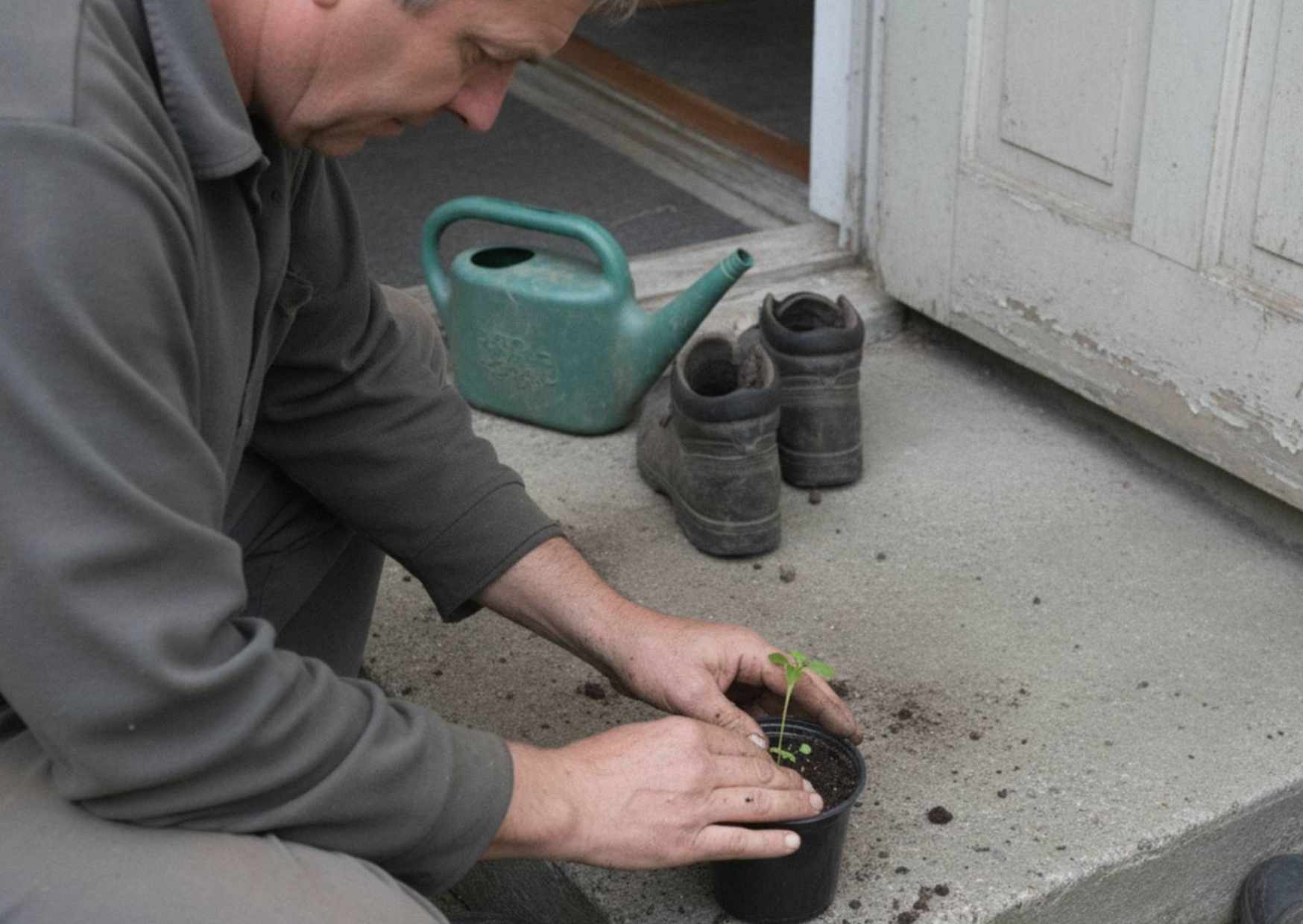
Not into a launch. Not into a strategy. Into his own dirt, where he lives.
Then it grows into something larger, something other people can find their place inside of. There are a lot of small steps on the way to a life lived with Jesus on his mission, and honestly, all of them are baby steps at first.
The promise is just as clear. After the good news takes root and changes your own heart, it expands outward and starts including other people. The small things you do to cultivate growth in your own life will have a larger effect over time than you can currently imagine.
Small is big. Remember that one if you plan to still be standing in twenty years.
Slow is fast
That wasn’t the only code Jesus gave his disciples.
“What shall I compare the kingdom of God to? It is like yeast that a woman took and mixed into about sixty pounds of flour until it worked all through the dough.”
The pattern: yeast is a catalyst, and it works slowly at first. The gospel starts changing us quietly, and then that change reaches into every corner of our lives.
The promise: Jesus’ rule and reign is present now. Not just later, not just after we die. It transforms our perspectives and priorities, our motives and our methods.
Living on God’s mission is mostly small shifts in what we believe and how we live, and those shifts add up over years into something big. A ball of dough takes as long as it takes. So do we.
If planning your rest before your work sounds backwards, that’s the same principle running underneath: Why Planning Rest Before Work Is Smart
What both parables are actually driving at
Underneath the seed and the yeast is one goal. Multiplication.
The good news of Jesus’ rule isn’t only about the small changes in your life that add up to your own transformation. It’s that a transformed life multiplies into other lives, and those into others.
Which means we are not called to build elaborate structures and systems and programs and then go hunting for enough people to fill them up for us.
We’re called to plant small gospel seeds that grow into changed lives, changed families, changed neighborhoods.
I know how unsatisfying that can feel when you’re staring at a calendar and a budget and a board. Small and slow don’t photograph well. Nobody puts “we planted three seeds this year” on a slide.
But it’s the only pace that has ever produced anything that lasted. And it’s the only pace a human being can actually keep.
Next in this series: Are You Measuring What God Measures in Your Life and Ministry? where we finish this oath and look at what we’re actually counting.
If you want the long version of all of this, I wrote a whole book on it: Small Is Big, Slow Is Fast.
FAQ
Q1: How do I move at God’s pace when my church expects growth this year?
Start by separating the two conversations. You can be honest with your leaders about what you’re planting and what it will take to see fruit, without pretending the timeline is yours to set. Most boards can handle slow. What they can’t handle is being surprised.
Q2: How do I tell the difference between God’s slow and my own passivity?
Slow still moves. If you can name the seeds you planted this month and the people you poured into by name, you’re moving. If you can’t name either, that isn’t patience.
Q3: I’m already burned out. Where do I start?
Not with a new strategy. Start with rest you actually take, and one or two people you actually pour into. Everything in this oath assumes you’re still alive at the end of it.

About the author, Caesar
The author of the top-selling books, The Gospel Primer, Transformed and Small is Big, Slow is Fast. His latest book, SLOW BURN: Relaxing Into Theology hit #1 on Amazon.
"I help those with a high commitment to intentional living in the areas of their family, faith and work acquire the leadership skills and tools necessary to succeed and leave a lasting legacy."